35th EACSL Annual Conference on Computer Science Logic 2027

25-29 January 2027, Brighton, UK
About
Important Dates
| Abstract submission: | |
| Paper submission: | |
| Notification: | Thursday, 15 October 2026 (AoE) |
| Final Version Due: | TBD |
| Conference: | 25-29 January 2027 |
Sponsors



Invited Speakers




Call for Papers
Topics
Topics of interest include, but are not limited to:- Automata and games
- Automated deduction
- Category theory, categorical logic, and topological semantics
- Coalgebra
- Computability
- Concurrency and distributed computation
- Constructive mathematics
- Cyclic proofs
- Database theory
- Decision procedures
- Denotational semantics
- Description logics
- Domain theory
- Effects
- Equational logic and term rewriting
- Finite model theory
- First-order logic
- Formal methods
- Foundations of programming languages
- Game semantics
- Higher-order logic
- Interactive theorem proving
- Intersection types
- Knowledge representation and reasoning
- Lambda calculus and combinatory logic
- Linear logic
- Logic programming and constraints
- Logical aspects of AI
- Logical aspects of computational complexity
- Logical aspects of quantum computing
- Modal and temporal logic
- Model checking
- Nonmonotonic reasoning
- Probabilistic methods
- Program synthesis
- Proof theory
- Realizability
- Security and privacy
- Specification, extraction and transformation of programs
- Type systems
- Type theory
- Verification and program analysis
Submission
Submitted papers must be in English and must provide sufficient detail to allow the Programme Committee to assess the merits of the paper. Full proofs may appear in a clearly marked technical appendix which will be read at the reviewers' discretion. Authors are strongly encouraged to include a well written introduction which is directed at all members of the PC.
The paper should be submitted via HotCRP: https://form.sdu.dk/CSL2027/
The CSL 2027 conference proceedings will be published in the Leibniz International Proceedings in Informatics (LIPIcs), see here.
Authors are invited to submit contributed papers of no more than 15 pages in LIPIcs style (not including appendices or references), presenting unpublished work fitting the scope of the conference. Papers may not be submitted concurrently to another conference with refereed proceedings. The PC chairs should be informed of closely related work submitted to a conference or a journal.
Papers authored or co-authored by members of the PC (but not PC chairs) are allowed.
The submissions are double-blind, with the following rules:
- Authors are not allowed to put their name on the paper, and they should avoid revealing their identities in text (references to previous or related work should be in third-person).
- Authors are allowed (and even encouraged) to disseminate the work on public repositories (e.g. on arXiv or their websites).
Papers authored solely by students or for which students are the main contributors will be considered for the Helena Rasiowa award.
Tools, including tools based on generative technology, cannot be listed as co-authors, and papers are expected to be written by their authors.
Papers which appear to not be written in good faith might be desk rejected without undergoing the full reviewing process. This includes in particular papers with references to non-existing work or with serious misrepresentation of own or related work.
Following the LIPIcs author instructions, references should contain an external link (e.g., DOI or URL) whenever possible. DOI is preferred.
If papers describe a research artifact such as software or formal proofs, the artifact needs to be submitted for review. All artifacts have to be accompanied by a disclosure statement, detailing any use of generative tools and the parts of the artefact to which this applies.
Committees
PC Chairs
Program Committee
Local Organizers
Venue and local information
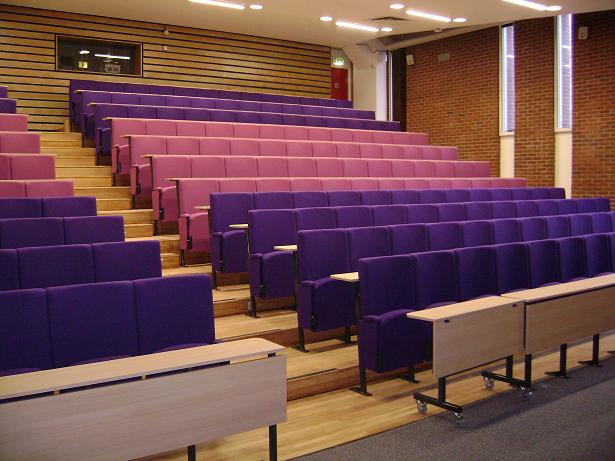
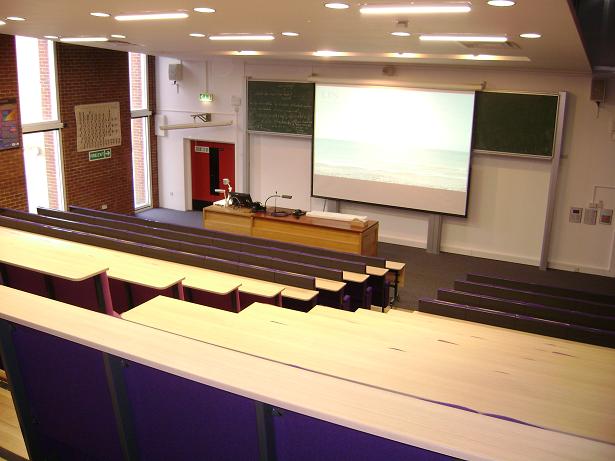

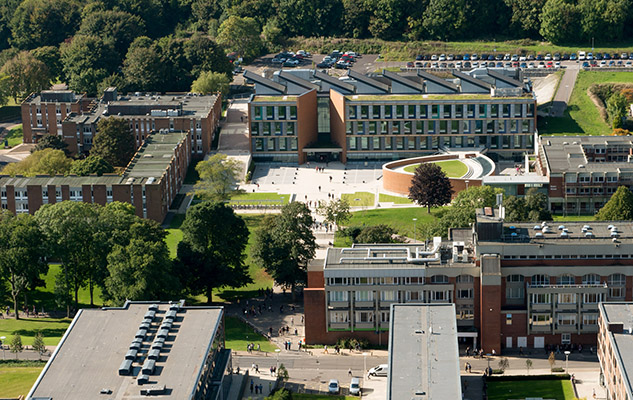

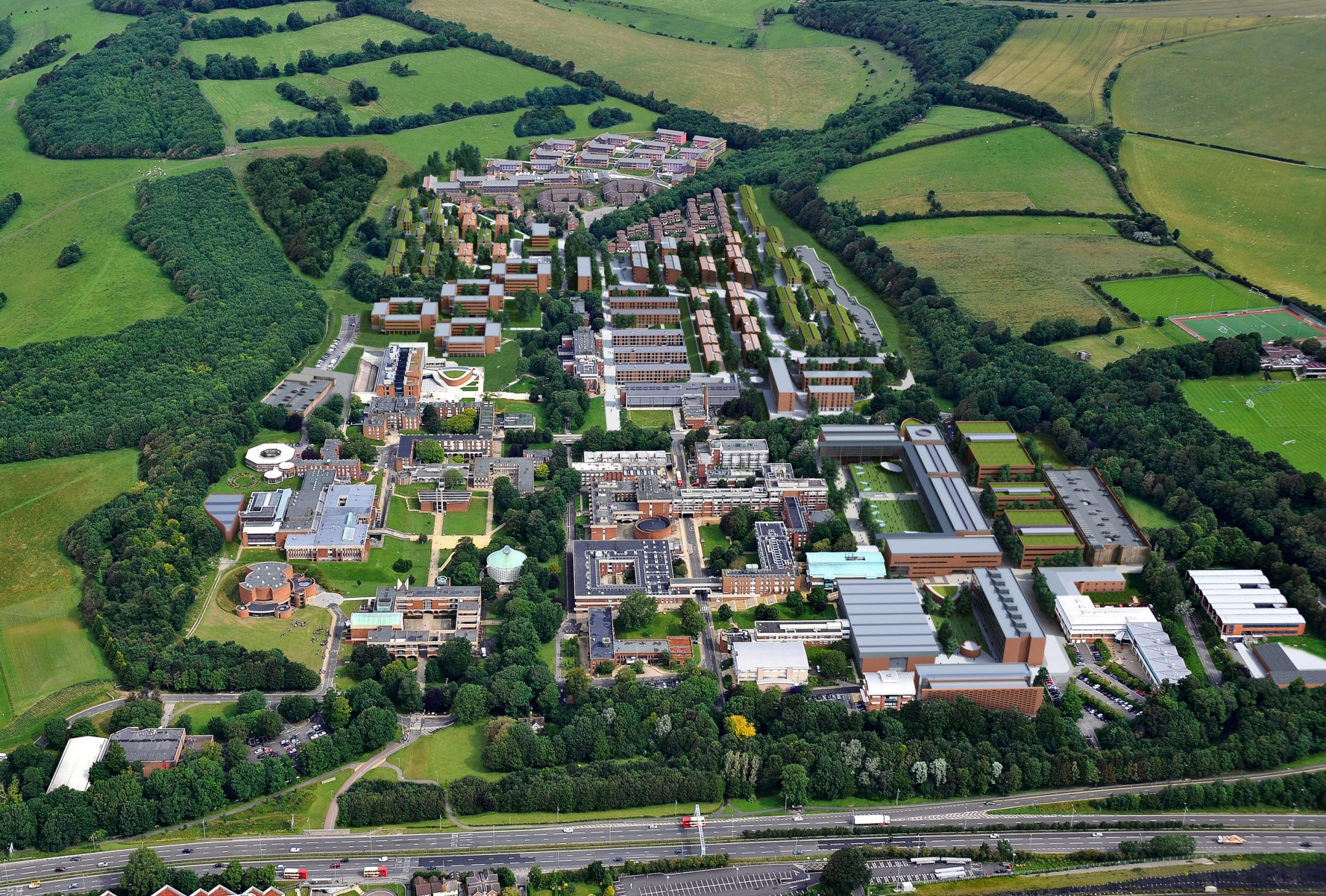
The conference will be held at the University of Sussex, Brighton, UK.
The University of Sussex is located in the Falmer campus.
The campus is easily accessible by public transportation, with regular bus services connecting it to the city center and nearby train stations.